
A Thoughtful Review

https://eji.org/ :EJI website!

It is also going to be a movie!

Whenever things got really bad, and they were questioning the value of their lives, I would remind them that each of us is more than the worst thing we’ve ever done.

(Stevenson 290)

In fact, there is a strength, a power even, in understanding brokenness, because embracing our brokenness creates a need and desire for mercy, and perhaps a corresponding need to show mercy.

(290)


Just Mercy is a powerful, true story about the Equal Justice Initiative and all the work they did to attempt to fix our clearly broken criminal justice system. Bryan Stevenson, the author and founder of EJI, discusses how he works to help the poor, wrongly condemned, children, and those who don’t have anyone else to help them. Stevenson shares stories of some of his clients and how he has worked to get them shortened sentences or out of prison indefinitely. As you read through the book, a story that sticks with you throughout the entire book is the case of Walter McMillian. Walter was placed onto death row for a crime he did not commit and Stevenson stuck and worked with him for a very long time to get justice to him.

I have never read a book quite like this and I really enjoyed it. The criminal justice system has always fascinated me and I was not really aware of how bad the system really was. In the book, there were a lot of facts but the stories of clients Stevenson helped really helped me put all the facts into perspective so I appreciated that. There is nothing I can think of that I disliked about the book. Bryan Stevenson wrote this book in a way that everyone can understand it. There were facts but there was nothing too complicated and he always had a story to back up or explain it.

The book did leave me wondering about what happens to the law enforcement employees who falsely accuse people. I also have a hard time wrapping my head around how a person can live with themselves after they falsely accuse someone and they are aware of what they did. This book really leaves you wondering how this system we have could possibly be this bad.

I recommend this book, 10/10. I am very intrigued by the justice system and Stevenson taught me a lot I did not know in a simple way. If you are interested in reading this book, another book that you might want to consider is The Sun Does Shine: How I Found Life and Freedom on Death Row which also has Bryan Stevenson in it but is written by a specific prisoner on death row.


Becoming Bryan Stevenson

I woke up the next morning with a broken heart. I knew that Mr. Dill is no longer with us and that made me want to throw down my papers and quit. What is the point of all this work, I thought to myself. I have put so much time into my work but what am I going to accomplish if the justice system I am working in is broken. At my office, I am surrounded by all these devastating cases that I have to work with every single day. I go to work and research and try to help the poor people who need my help but in a broken system how much am I really helping?

No more than 10 minutes later, a young, bright girl calls my phone. She introduces herself as Walter’s granddaughter. She explains how she is beyond grateful for my efforts in releasing her grandfather and how my work has impacted her and everyone around her’s life. Those few minutes that I was on call with her really brought me back to reality. Even though our system is broken and unjust, the work that my team and I do affects my clients, who are forever grateful, and the people of the community who are wishing for a change. I must never forget that that is what I am putting all this work towards, a better future and a bigger change.


Thoughts about text

“He summoned two officers, who went to Joe’s cage to unlock it. The cage was so small that when they tried to remove Joe’s wheelchair, the spokes on the chair got caught on the cage, and they couldn’t budge it… I couldn’t see Joe’s face while all of this was going on, but I could hear him crying.”

Stevenson 261-262

The prison was set up in a way that the convicts who are in prison for life stay in a small four-by-four metal cage. According to the guards, they are in cages for “higher security protocols”(262). This section stuck with me because the way some of the prisoners are treating is extremely unfair, especially to the children. In Joe’s case, he was sent to an adult prison at the age of thirteen for a non homicidal crime. It is not uncommon for teens to be sent to adult facilities and unfortunately, the teens are more susceptible to abuse and assault. Joe was raped and sexually assaulted multiple times. He attempted suicide quite a few times and also developed multiple sclerosis(hardening of body tissue). Because of that he was placed in a wheelchair, as we can see from above. The prisoners get placed in the overcrowd facilities and are neglected and abused. The only positive thing in my book is all the work Bryan Stevenson is doing to reverse the actions the State is taking.

The Great Alone Summary

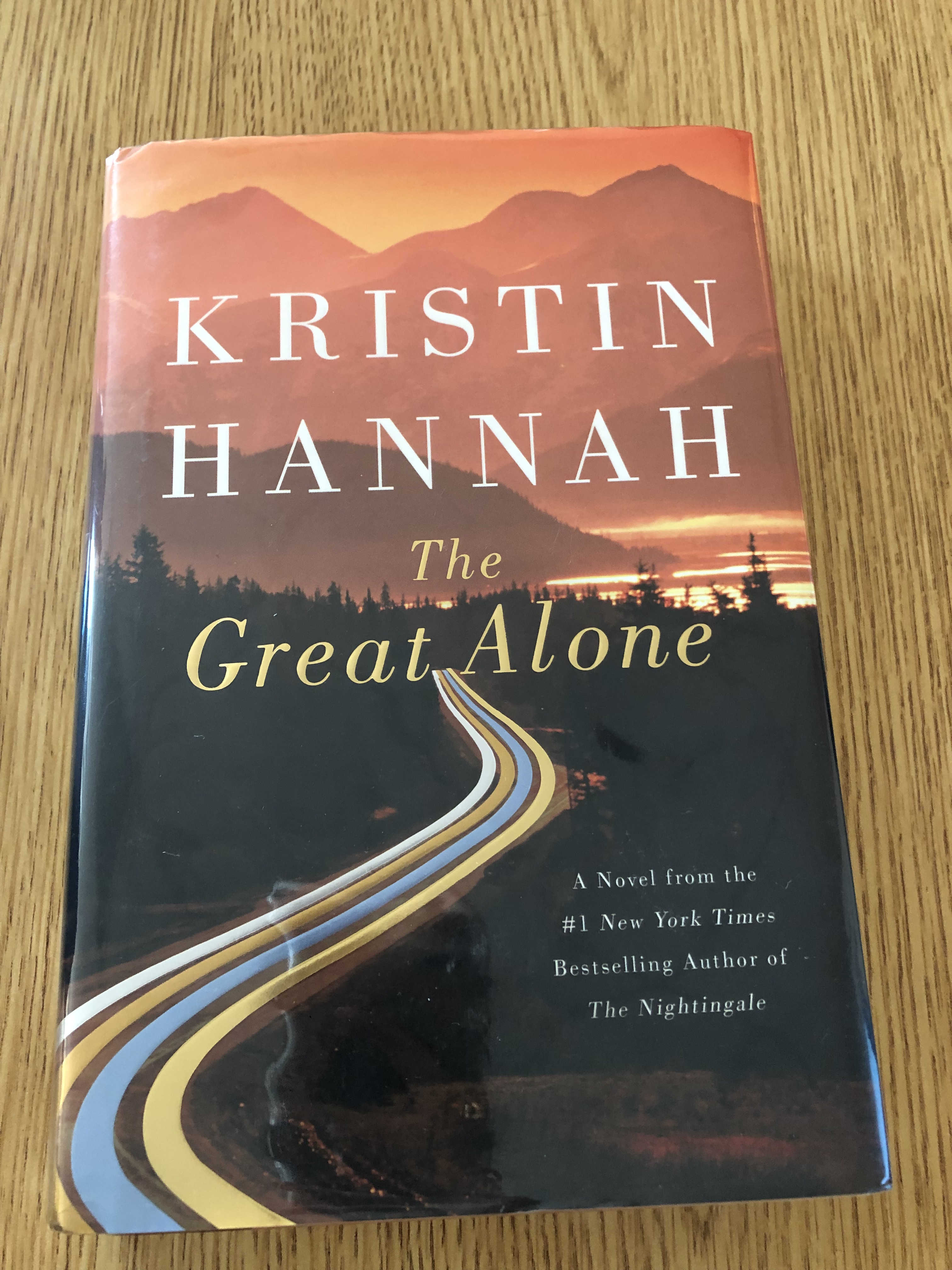
The Great Alone by Kristin Hannah

The Great Alone is a bizarre and crazy story about a family; Leni, her father Ernt, and her mother Cora, who pack up their home and moved to Alaska. Ernt makes the executive decision to move up there, without any knowledge or supplies, and Leni and her mom follow him with no say… Which foreshadows other events in the book. The author tells the story of survival in Alaska and also in Leni’s home. There are many conflicts inside of the family and obviously outside in the town and with nature (because Alaska duh).

Book Quote from Chapters 7-10 from Just Mercy

This section of Just Mercy was one story after another about injustice in our system. A part that really stood out to me was the section about children and how they get put into the adult system for life for a crime they committed when they were younger. States were under the impression that children “have absolutely no respect for human life”( Stevenson 159) and that the children needed to be exposed to the adult justice system.

“[t]here is no evidence that young people involved in violence during the peak years of the early 1990s were more frequent or more vicious offenders than youths in earlier years.”

(159-160)

The State continued to sentence kids who committed crimes when they were teenagers to life in prison. While reading through this chapter, a common theme in the kids was the poor living conditions they grew up in. Also, how the crimes they committed was not a reflection of their character but of their background and prior living conditions. This quote also explains how the State and other law enforcement agencies won’t willingly look into evidence to prove the case otherwise. They just want to have the cases done and over with, which, in turn, can screw over the wrongly or cruelly punished.

Design a site like this with WordPress.com
Get started